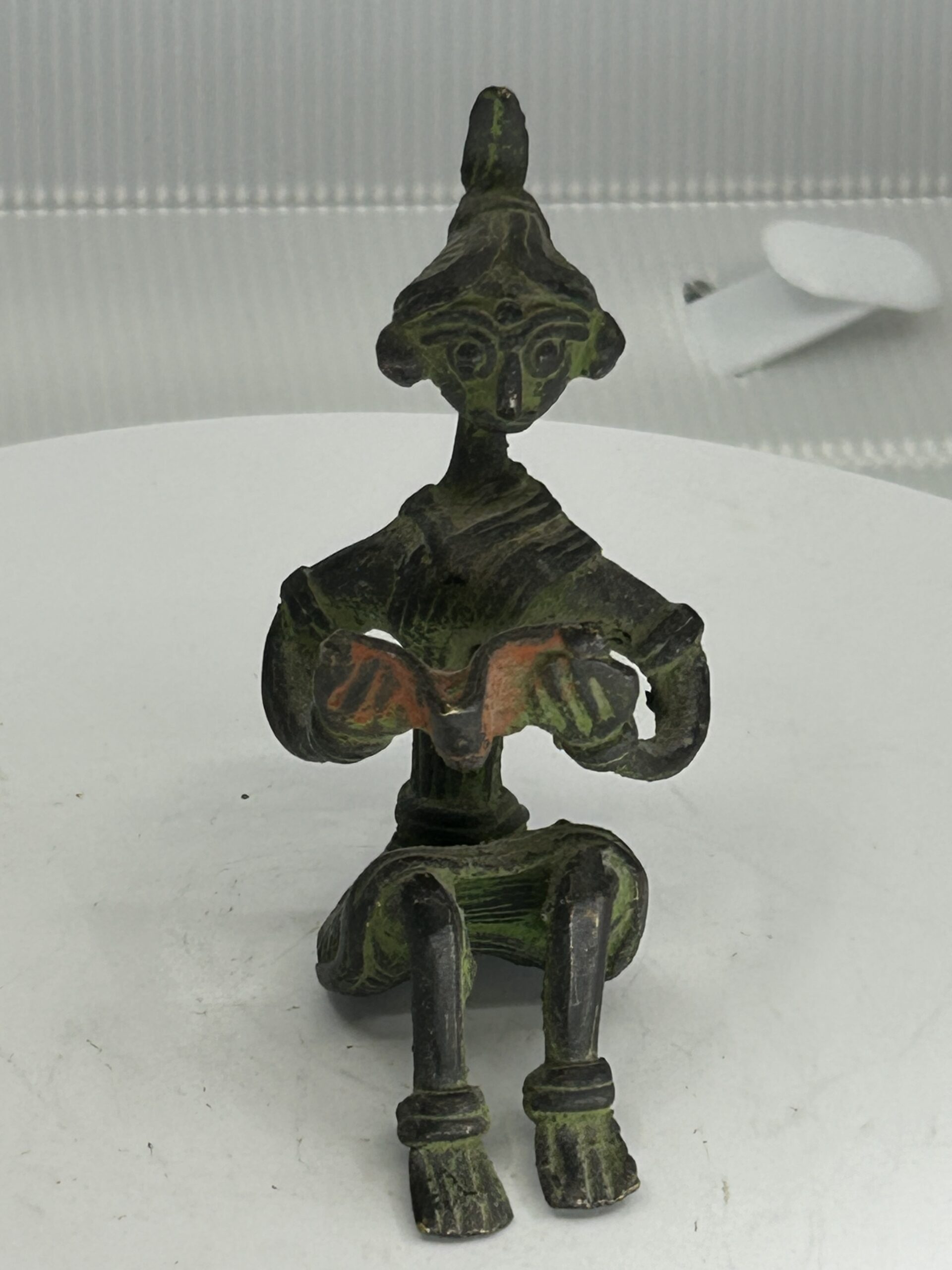
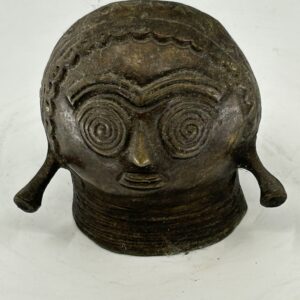
from Bath England large auction group
modern piece
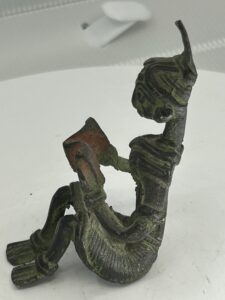
⭐ 1. This is Dhokra, but from a later, more decorative phase
Everything about it says:
- simplified modeling
- smoother surfaces
- brighter, more uniform alloy
- stylized “cute” proportions
- exaggerated head shape
- instrument‑holding pose (a very common tourist‑era motif)
This is the kind of piece that began appearing in:
late 1980s–2000s,
when Dhokra workshops started producing items specifically for:
- craft fairs
- export shops
- tourist markets
- decorative home stores
It’s still handmade, still lost‑wax, still culturally rooted — but it’s not a ritual object.
⭐ 2. The patina is applied, not naturally aged
The greenish oxidation and reddish tones are:
- surface treatments
- chemical patinas
- sometimes even paint or wax coloring
Older Bastar pieces develop a matte brown patina with soft oxidation. This one has the brighter, more “designed” finish typical of newer decorative Dhokra.
⭐ 3. The figure’s posture and instrument are tourist‑era motifs
The seated musician figure is one of the most common forms produced for:
- gift shops
- export catalogs
- decorative sets (often sold in groups of 3–5 musicians)
Your piece is a solo version of that style.
It’s charming — but it’s not ethnographic or ritual.
⭐ 4. The casting technique is simpler
Compared to your older Bastar pieces:
- the coil work is minimal
- the modeling is smoother
- the details are less complex
- the base is more uniform
This is typical of newer Dhokra made for commercial sale.
⭐ 5. Age estimate
Based on style, patina, and construction:
1990s–2000s, possibly early 2010s.
Definitely newer than your other pieces.
⭐ 6. Value
These pieces are widely available and priced accordingly.
Inside India:
₹800–₹2,000 (about $10–$25)
Outside India:
$20–$60 Higher only if part of a full musician set.
It’s decorative, not collectible — but still handmade and culturally interesting.
⭐ Final read
This piece is:
- Dhokra, yes
- but newer
- tourist‑market or decorative‑market
- not ritual
- not Bastar classical style
- charming, but not in the same category as your older bronzes
And that’s perfectly fine — it’s a good example of how the Dhokra tradition evolved into a commercial craft.
Description
Leave a Reply