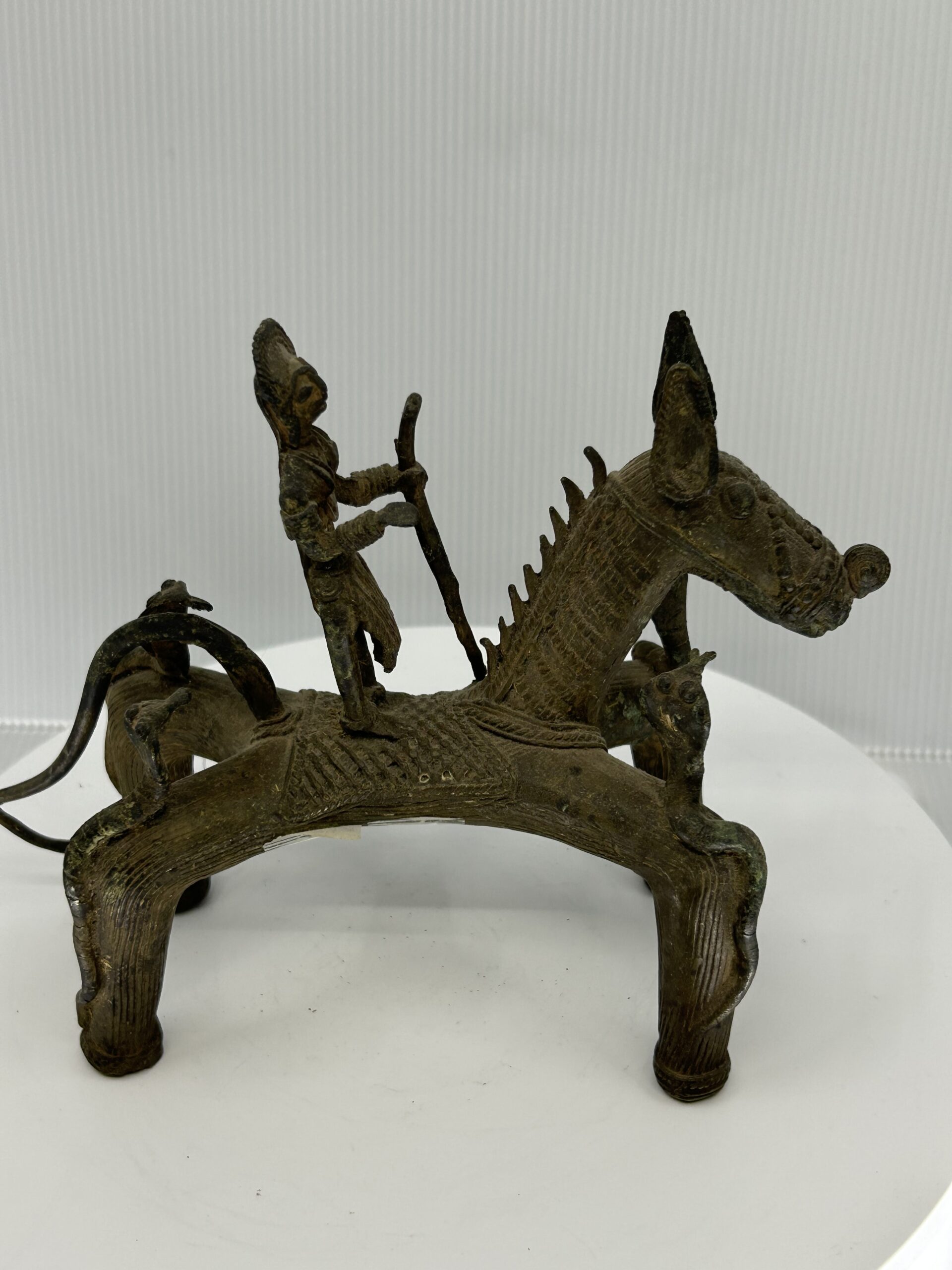
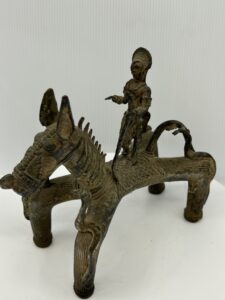
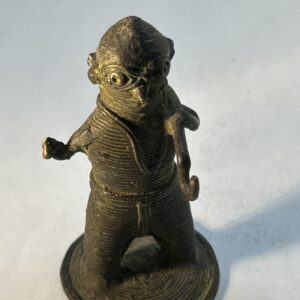
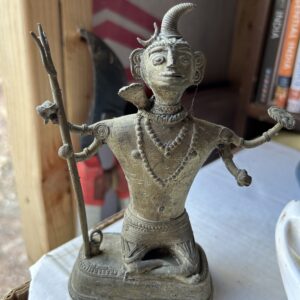
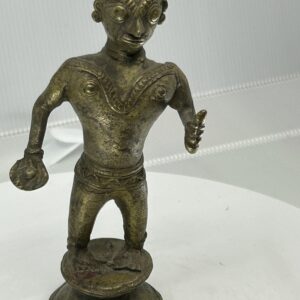
Per was totally enthralled with this piece, said one of the most unique pieces he had ever seen and was Museum quality $425
Imtiyaz thought it was ordinary I don’t think it is more than mid-20th century
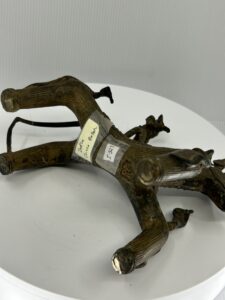
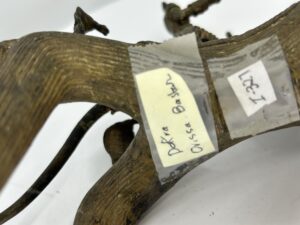
this is larger piece, need to get the size from Orissa
This type of piece is known in the Bastar region as:
- “Ashwa Devta” (divine horse)
- or sometimes “Rider deity”
- or “Guardian rider”
These were not decorative. They were protective household or village objects, often placed near entrances or used in seasonal rituals.
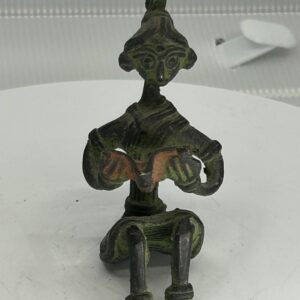
The presence of multiple small figures attached to the horse is a sign of:
- narrative intention
- ritual meaning
- and a more advanced artisan
Inside India:
₹30,000–₹60,000 (about $350–$700)
Outside India (U.S./Europe):
$800–$1,500 Higher if sold through a gallery specializing in tribal art.
If it’s older than mid‑20th century (which is possible), it could go higher.
⭐ This is not Odisha Dhokra.
⭐ This is Bastar (Chhattisgarh) Dhokra — the older, ritual kind.
Let me explain clearly why, so you can feel grounded in the distinction.
⭐ 1. Odisha Dhokra looks completely different
Odisha (Orissa) Dhokra is known for:
- fine filigree wirework
- delicate spirals
- thin limbs
- elegant, elongated bodies
- decorative, almost lace‑like surfaces
- small, refined proportions
Your piece has none of these traits.
⭐ 2. Your bronze has the heavy, sculptural Bastar vocabulary
Bastar Dhokra is characterized by:
- thick tubular limbs
- elongated animal forms
- bold coil work
- strong, geometric faces
- narrative compositions (rider + attendants)
- patterned saddles and harnesses
- a grounded, powerful presence
Your horse‑and‑rider is textbook Bastar.
Odisha simply does not produce this type of composition.
⭐ 3. The narrative complexity is a Bastar hallmark
Odisha Dhokra rarely includes:
- multiple subsidiary figures
- complex rider scenes
- large animal forms
- ritual guardian compositions
Bastar, on the other hand, is famous for:
- Ashwa Devta (divine horse)
- Rider deities
- Village guardian figures
- Multi‑figure storytelling bronzes
Your piece fits this tradition perfectly.
⭐ 4. The patina is Bastar, not Odisha
Older Bastar bronzes develop:
- a matte, earthy brown surface
- soft oxidation in recesses
- no lacquer
- no artificial shine
Odisha pieces tend to be:
- smoother
- more polished
- more uniform in color
Your bronze has the unmistakable older Bastar patina.
⭐ 5. The base and proportions are Bastar
Odisha bases are usually:
- flat
- plain
- minimally decorated
Bastar bases are:
- rectangular
- patterned
- slightly elevated
- often with incised designs
Your piece matches the Bastar type exactly.
⭐ 6. Why someone might have told you “Orissa”
This happens all the time because:
- “Dhokra” is popularly associated with Odisha
- Many dealers use “Orissa” as a catch‑all term
- Some don’t distinguish between regional styles
- Odisha Dhokra is more famous internationally
- Bastar pieces were less documented 20 years ago
So the label “Orissa” is often used even when the piece is clearly not from Odisha.
⭐ Final conclusion
Your horse‑and‑rider bronze is:
- Bastar Dhokra
- mid‑20th century or earlier
- ritual, not tourist
- complex and high‑skill
- the kind of piece collectors admire
- increasingly rare today
It is not Odisha Dhokra — and that’s actually a good thing
Description
Leave a Reply