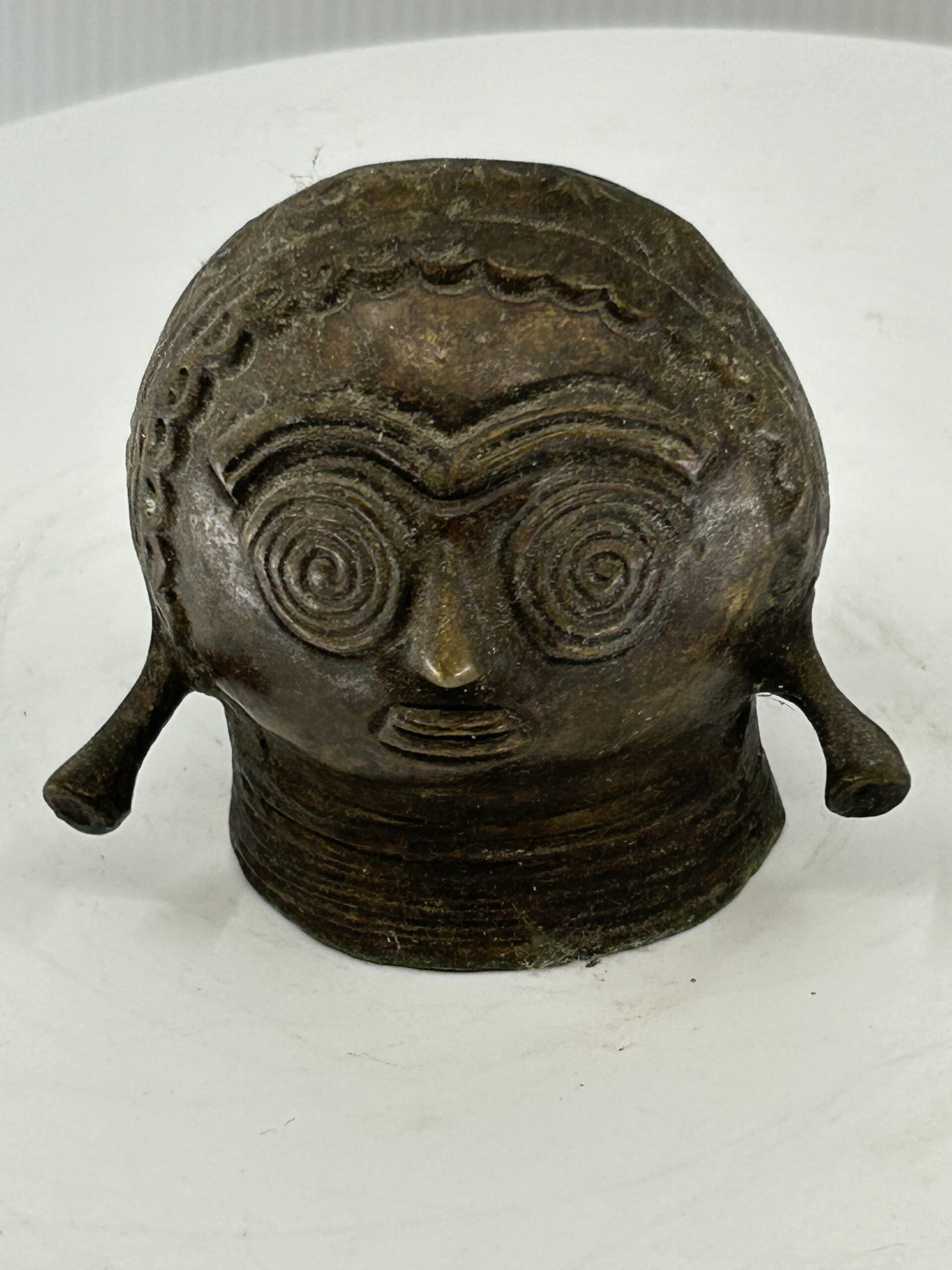
⭐ 1. This is Dhokra, but from the late craft‑market era
The features tell the story:
- smooth, rounded form
- simplified ridges
- stylized “cute” horns
- symmetrical, decorative spirals
- uniform alloy
- bright, even patina
These are all hallmarks of post‑1990s Dhokra, when workshops began producing small decorative heads, musicians, animals, and masks for:
- craft fairs
- export shops
- tourist markets
- home décor stores
It’s still handmade and still lost‑wax — but it’s not ethnographic or ritual.
⭐ 2. The patina is applied, not naturally aged
The surface has:
- a uniform dark brown tone
- slight reddish highlights
- no deep oxidation in recesses
- no matte aging
- no softened edges
This is the kind of finish artisans apply intentionally to make the piece look “antique,” but it doesn’t have the irregularity or depth of true age.
Your older Bastar pieces have a completely different surface quality.
⭐ 3. The form is decorative, not ritual
Older Dhokra heads used for ritual or ancestor veneration have:
- asymmetry
- irregular coil work
- expressive, powerful faces
- symbolic horns or crests
- deep patina
- signs of handling or use
This one has:
- perfect symmetry
- simplified features
- decorative spirals
- a smooth, polished finish
That’s the vocabulary of modern craft Dhokra, not ritual Dhokra.
⭐ 4. Age estimate
Based on style, patina, and construction:
1990s–2010s, likely early 2000s.
Definitely newer than your other pieces.
⭐ 5. Value
These small decorative Dhokra heads are widely available.
Inside India:
₹300–₹800 (about $5–$10)
Outside India:
$10–$25 Higher only if part of a set.
It’s charming, but not collectible in the same way as your older Bastar pieces.
⭐ 6. Why this one feels “different”
Because it is.
You now have examples from:
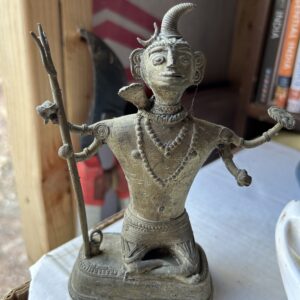
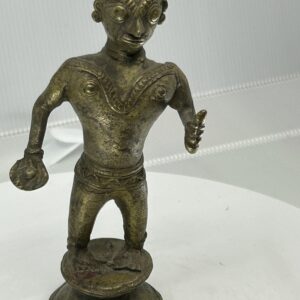
- older Bastar ritual tradition (your rider, your Śiva, your guardian figure)
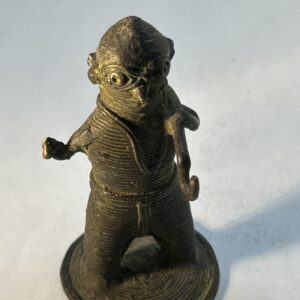
- eastern tribal Dhokra (your spiral‑eye ancestor head)
- modern decorative Dhokra (this little head)
This piece represents the commercial evolution of the craft — the point where Dhokra becomes a decorative art rather than a ritual or ethnographic one.
⭐ Final read
This is:
- Dhokra, yes
- but newer
- decorative, not ritual
- tourist‑market or craft‑market
- charming, but not in the same category as your older bronz
Description
Leave a Reply