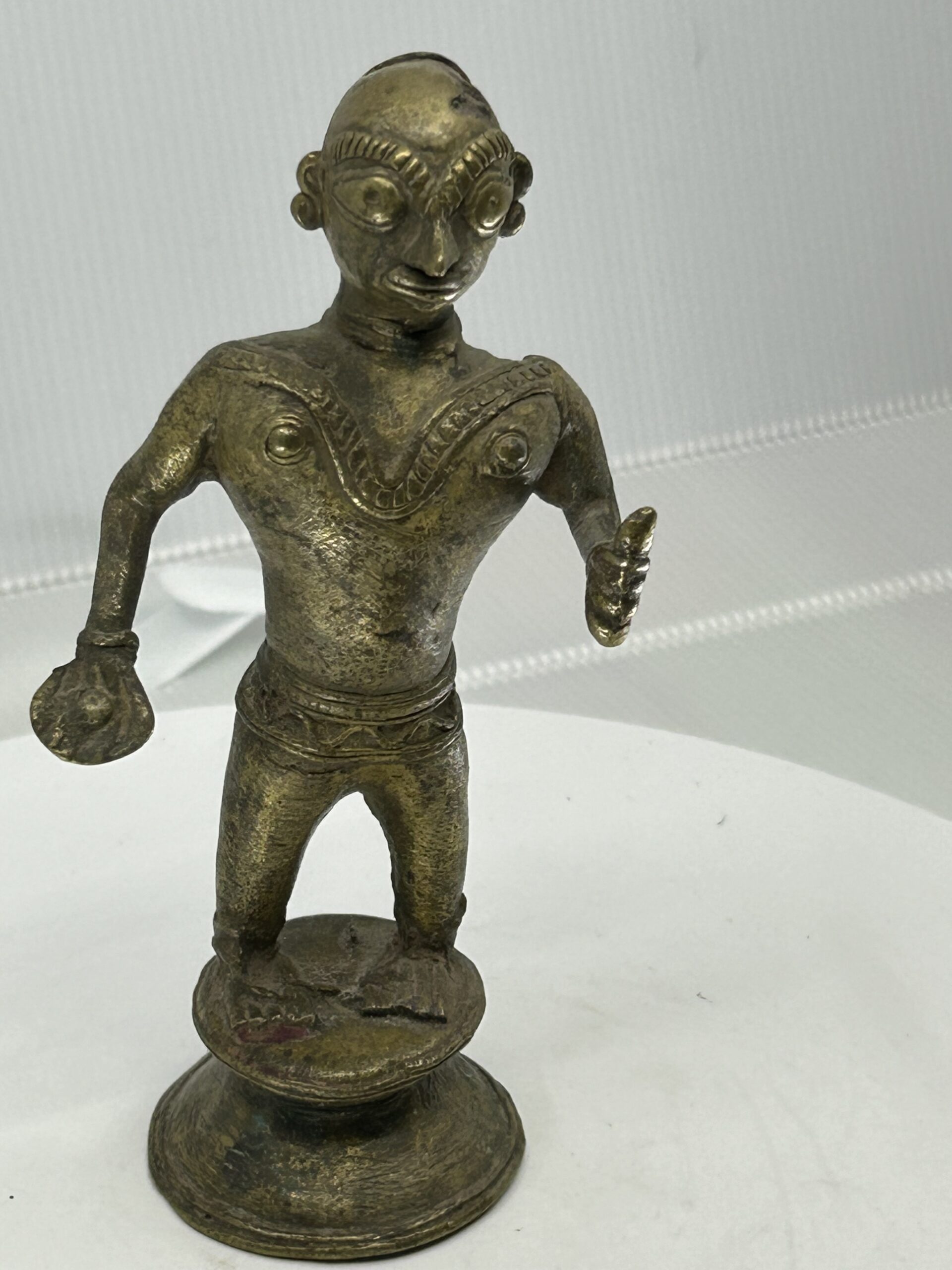
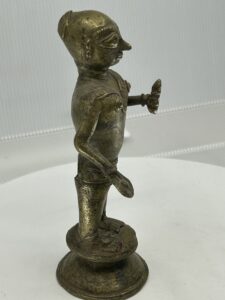
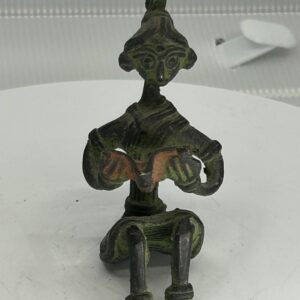
standing devotee, it looks like Dhokra to me, but I cannot really tell
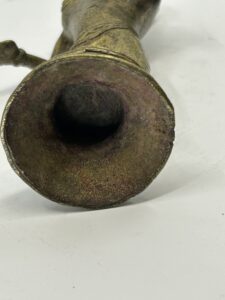
⭐ 2. What it is: a mold‑cast tribal‑style figurine, likely from:
Bastar craft workshops (post‑1990s)
or
Odisha craft clusters producing non‑coil “Dhokra‑style” pieces
Around the 1990s–2000s, many workshops began producing:
- simplified figurines
- cast from reusable molds
- with stamped or carved details
- meant for tourist and export markets
These pieces are inspired by Dhokra but do not use the traditional technique.
They are often sold as Dhokra, but technically they are:
“Dhokra‑style brass figurines”, not true Dhokra.
⭐ 3. The stylistic clues
Your figure has:
- a smooth, rounded head
- stamped necklace pattern
- simplified limbs
- a symmetrical, decorative posture
- a uniform alloy and finish
These are all hallmarks of mold‑cast craft‑market production, not lost‑wax tribal casting.
⭐ 4. Age estimate
Based on style and finish:
1990s–2010s, likely early 2000s.
Definitely newer than your older Bastar pieces.
⭐ 5. Value
These pieces are charming but not collectible in the ethnographic sense.
Inside India:
₹300–₹1,000 (about $5–$12)
Outside India:
$10–$25
They’re decorative, not ritual, and not part of the older Dhokra tradition.
⭐ 6. Why it feels “different”
Because it is.
You’ve now shown pieces from:
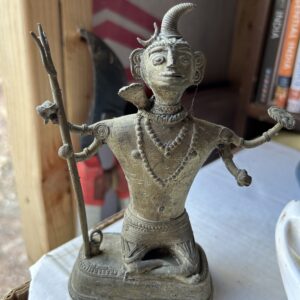
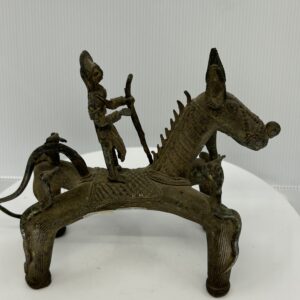
- older Bastar ritual Dhokra (your rider, your Śiva, your guardian figure)
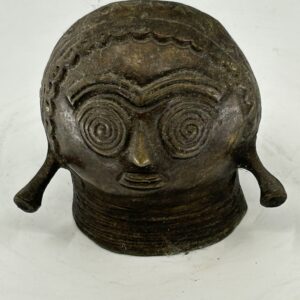
- eastern tribal Dhokra (your spiral‑eye ancestor head)
- modern decorative Dhokra (your seated musician)
- modern Dhokra‑style mold‑cast craft (this figure)
This one belongs to the last category.
It’s part of the commercial evolution of the tradition — workshops adapting to demand by simplifying the technique.
⭐ Final read
This figure is:
- not traditional Dhokra
- not coil‑built
- mold‑cast craft‑market work
- newer (1990s–2010s)
- decorative, not ritual
- still culturally interesting, but not in the same category as your older bronze
Description
Leave a Reply